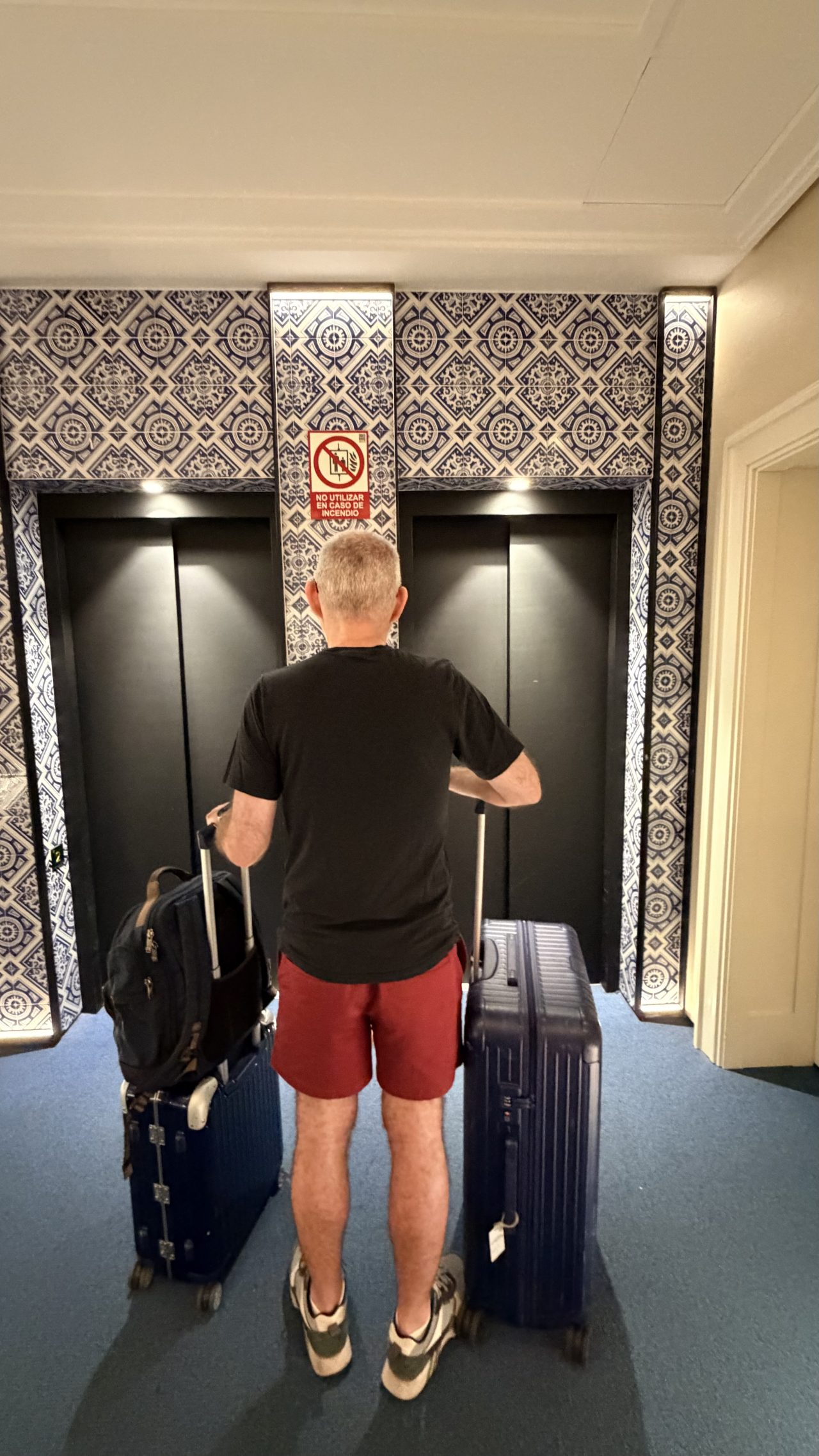
Making our way closer to Barcelona. Leaving the Pestana Collection Plaza Mayor hotel which was just fantastic.
✨ Found online
Pestana Collection Plaza Mayor is a luxury boutique hotel situated directly on Madrid's iconic central square. It offers elegant accommodations, an interior courtyard restaurant, a seasonal rooftop pool, and a historic spa.
What To Know:
The hotel occupies two historically significant 17th-century structures—the Casa de la Carnicería and a former fire station—and features an indoor spa pool built into an ancient brick-vaulted coal cellar.
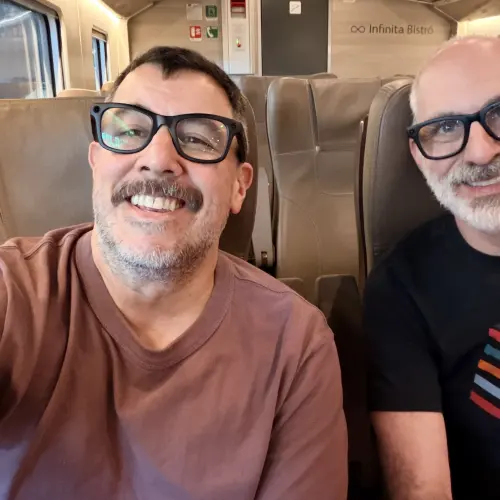
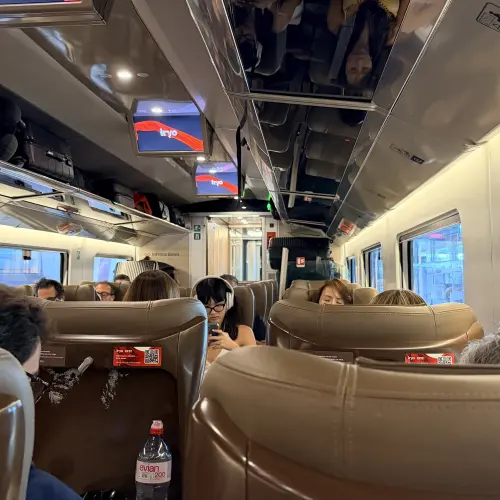
We are comfortably seated in our seats on the Iryo train line to Barcelona.
Thankfully Brad had the sense to go ask an attendant if we should line up because the train never showed up on the board and the previous train scheduled before us seemed to not have left.
We were able to get on pretty early which is good because there is not a lot of space for big luggage. But as I’m typing this I’m seeing the attendant push a huge piece of luggage overhead.
It is just over 3 hour ride and we are in the Infinita Bistro car which I guess is the business class of train travel as we do have bigger seats and get a meal.
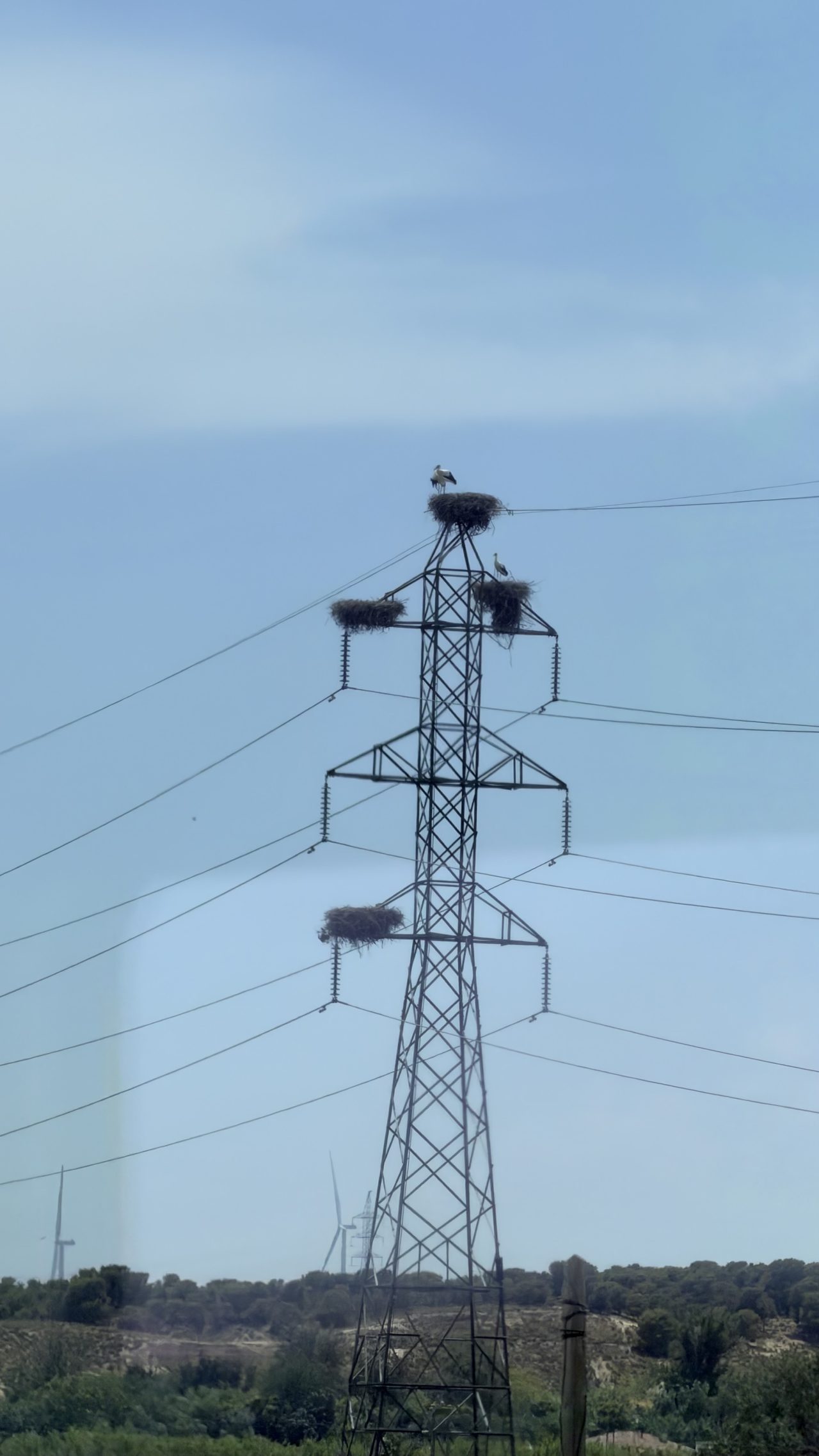
White stork nests on the power towers as seen from the train.
✨ Found online
Massive white stork nests built on high-voltage power towers and railway catenaries are a famous sight along the Ebro River valley and train lines just outside Zaragoza, Spain.
Address:
La Cartuja Baja and El Burgo de Ebro corridor, Zaragoza, Aragon, Spain
What To Know:
Milder winters and abundant food from local landfills have led many white storks to reside here year-round rather than migrating. Their nests on utility pylons can weigh up to 300 kg, frequently requiring careful intervention by railway and power grid operators.
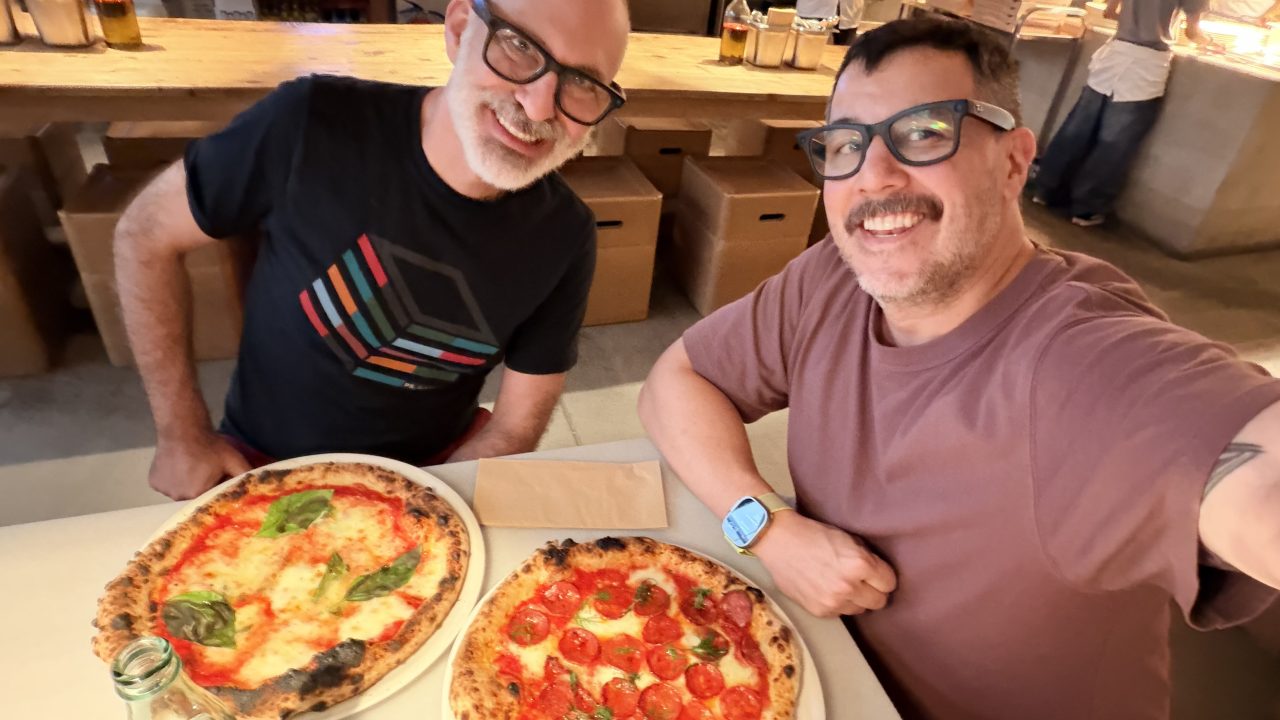
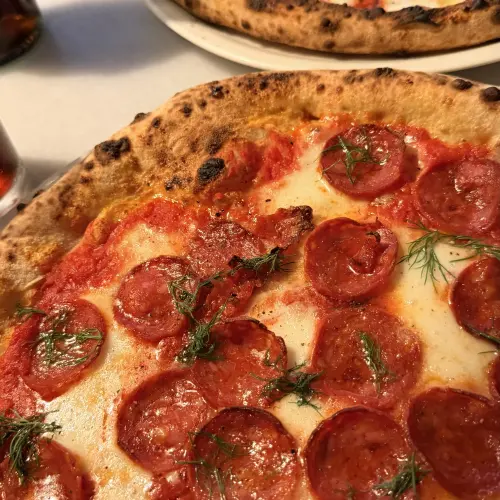
I visited this restaurant two years ago with Christine and decided to come back again for some damn tasty pizza. It’s called parking pizza because they took parking garages and converted them into restaurants.
✨ Found online
Set in a converted parking garage, Parking Pizza in Sarrià-Sant Gervasi offers artisan wood-fired, long-fermented sourdough pizzas in a trendy, industrial-style space with communal tables.
What To Know:
This location features 'Parking Sótano,' a clandestine steakhouse situated directly in the basement below the pizzeria, and features unique hollow cardboard stools that double as personal storage.
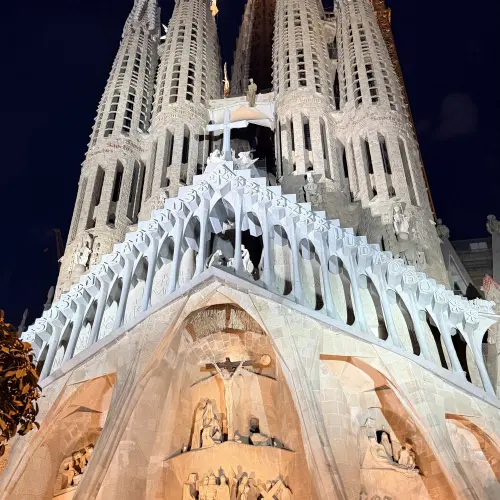
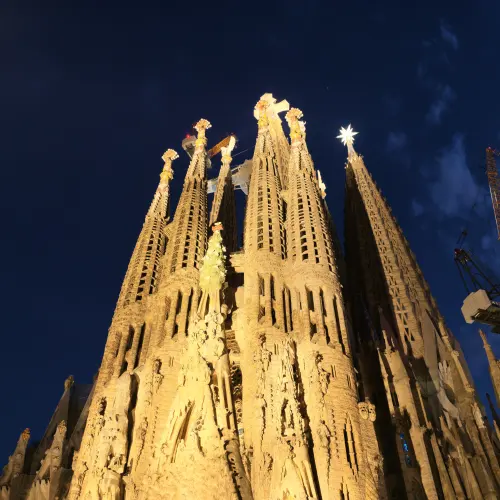
First time visiting Sagrada Família at night which was lovely to see it lit up. I was able to take the time lapse above because I sat myself down in front of McDonald’s and it took 30 minutes for Brad to get his cone… it was a shit show. But the result was I was able to spend 40 minutes making this time lapse. I still think the building is beautiful and grand.
✨ Found online
The Sagrada Família is an iconic, unfinished basilica in Barcelona designed by Antoni Gaudí, famous for its organic architecture, dramatic spires, and vibrant stained-glass windows.
What To Know:
Tickets must be booked online in advance; a late afternoon visit allows the sunset to spectacularly illuminate the interior's warm-toned stained glass.